


Back

A small dog sits on a red couch, looking towards the camera with its head tilted.](https://cdn.prod.website-files.com/663379b068243e81cd1bd4fd/667c15c9f851bf3b02bc3982_Overview.svg)


Back
industry


Back


Back


Most compliance teams already have some version of an obligation inventory. It may live in a GRC system, a spreadsheet, a SharePoint folder, a policy register, a control library, or a combination of all of the above. It may include obligations, risk categories, owners, review dates, policy references, controls, and maybe even citations to laws or regulations.
On paper, that can look like a mature compliance program, but in practice, it becomes exponentially harder to maintain as regulatory changes increase in volume year after year. Every time a rule is amended, its definition expands, threshold changes, a state issues new guidance, an agency updates a requirement, a regulator clarifies an expectation, a new jurisdiction introduces something that looks similar to an existing rule, but with just enough variation that the team cannot simply copy and paste its current approach. And every one of those changes has to be checked against the organization’s obligations, policies, controls, procedures, owners, and evidence.
That work is manageable when changes are occasional. But when updates arrive across multiple jurisdictions, agencies, formats, and timelines, manual maintenance starts to break down. The list gets longer, the citations get harder to verify, and the context becomes harder to reconstruct. The team ends up spending more time checking whether the inventory is still accurate than using it to actually manage compliance.
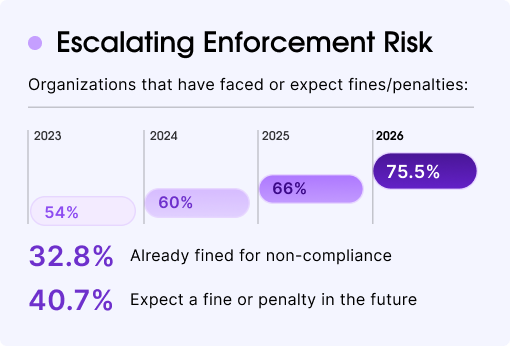
This is where many compliance teams lose time and confidence—not because they lack expertise, but because the legal foundation underneath their workflows is often fragmented, incomplete, or disconnected from the work that needs to happen next. This is why, according to our 2026 Regology State of Regulatory Compliance Survey, 73.5% of compliance professionals either have experienced or expect enforcement consequences for non-compliance.
It is no surprise that there is a lot of optimism (and even enthusiasm) for the latest AI tech to reduce the manual effort of sieving through updates. 60% of survey respondents reported using AI in some capacity within compliance already, and 75.5% believe AI can materially improve their efficiency.
Without a doubt, AI is a great tool in the toolkit, and it can be incredibly instrumental in reducing the amount of labor-intensive, repetitive manual work through automation and synthesis. However, the outcomes greatly depend on the quality of data it feeds on, and Bloomberg Regology’s answer to that foundational challenge was the Smart Law Library™. Acting as the basis of our broader Regulatory Change Agent, it not only ingests the latest regulatory information straight from the source, but it also flags which laws you might be missing in your list, as well as providing contextual analysis of the regulatory changes pertinent to your organizational DNA.
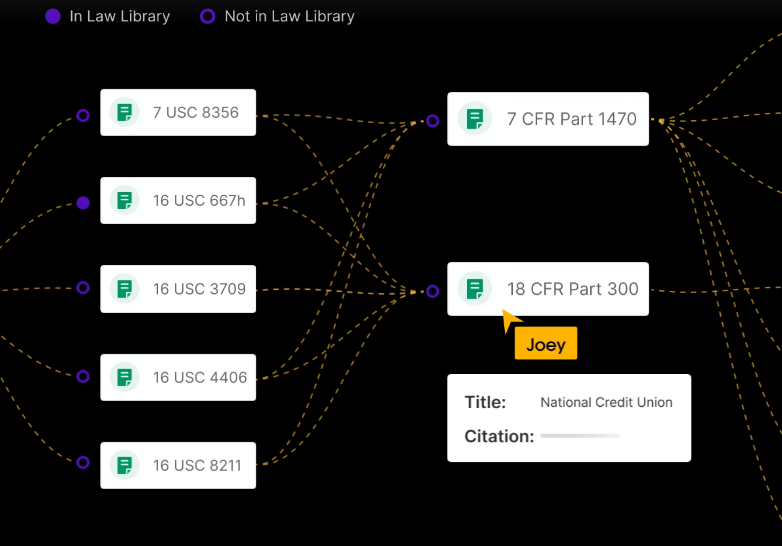
Across the conversations with both Bloomberg Regology users and our internal subject matter experts, the Smart Law LibraryTM emerges as the nucleus of regulatory change management; it acts as a dynamic, living knowledge base of governing text and a single source of truth. This is not simply “documents in a folder” or a static database, but a self-updating structured model of Acts, Codes, Parts, subparts, and agency rules, anchored to codified sections and stitched to amendments, risks, policies, and controls. It serves precisely as that foundational layer needed to move from static obligation tracking to living, source-backed compliance intelligence that is automated.
Furthermore, the Smart Law LibraryTM determines what is relevant, to whom, and why. Without filtering by jurisdiction, business line, and risk category, alerts quickly become noise. And without a way to connect those changes to real obligations and affected parts of the business, teams are left making those links manually, which slows response times, increases risk, and often leads to inconsistent handling across departments.
Meanwhile, the Smart Law LibraryTM is curated to your company’s profile and takes stock of what your current legal and regulatory requirements are, measuring them against the latest regulatory changes across local and global jurisdictions where you operate. It then issues relevant alerts to assigned team members with redlines, summaries, and parent-level grouping to reduce noise.
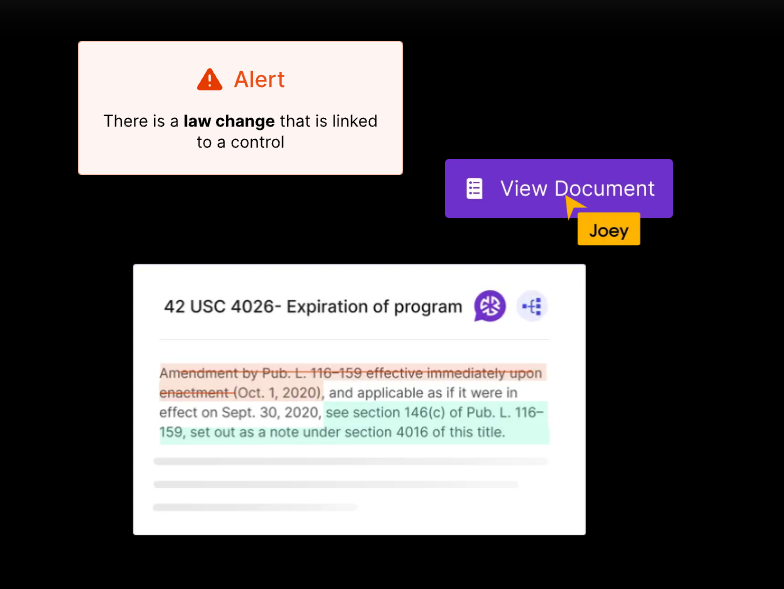
That means the analyst is not starting with a generic update or a half-remembered citation. The system has already monitored the codified legal source, and the alert highlights precisely what has changed, with redlines through the outdated text. Together with the change summary, the reviewer is properly oriented from the get-go, no longer spending time trying to find the right starting point through version control.
This is one of the biggest shifts in AI-powered compliance. In a manual operating model, compliance professionals spend too much time finding, formatting, comparing, copying, pasting, and rechecking. They subscribe to agency newsletters, monitor portals, skim bills, search for citations, compare versions, and update spreadsheets before they can begin the work that actually requires expertise. And if this is a global organization, the effort is enormous.
In an AI-powered model, that balance changes. The system handles more of the repeatable mechanics: detection, triage, redlining, summarization, and linkage, while compliance teams move into reviewer mode, where their expertise is used to determine applicability, risk tolerance, business context, and jurisdiction-specific decision making.
The Smart Law LibraryTM is not an isolated feature, but the foundation beneath the rest of the compliance lifecycle on Bloomberg Regology’s platform:
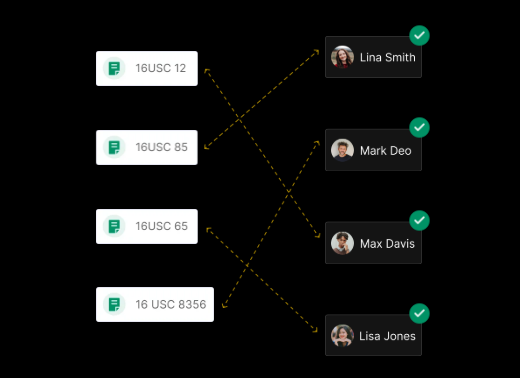
When the legal foundation is weak, each of those workflows becomes more manual. Teams have to search again, validate again, map again, document again, and defend again. When the legal foundation is structured and continuously updated, the workflow starts from a stronger place.
This is why the Smart Law LibraryTM matters before the AI agent ever recommends a policy update or extracts a requirement. AI can only be as useful as the source environment it works from. If the underlying legal content is scattered or stale, AI may simply accelerate fragmented work. But when AI is grounded in codified, source-backed, normalized legal content, it can support a more reliable process.
That is the difference between AI as a bolt-on tool and AI as part of a well-governed compliance system.
If you would like to learn more about the Smart Law LibraryTM and how it can help your compliance team, please reach out to us here or read our latest eBook that will take you behind the scenes of how the Bloomberg Regology platform works.
Horizon Scanning and Regulatory Change: Strategic Foresight in Action
Breaking Down Regulatory Alerts: How To Focus on What Matters Most
Understanding The Challenges of Multi-jurisdictional Legal Research
Regology was acquired by Bloomberg Industry Group.



Regology has been acquired by Bloomberg Industry Group, combining leading legal, tax and policy intelligence with regulatory AI.